Grant Writing For Environmental Projects That Turns Ideas Into Action
_______
How to Write a Successful Grant Proposal for Sustainability Projects
I learned how to write Grant Proposals, when I was a student at Rutgers University. I did not realize at the time that it was going to become more than just an assignment to complete a course. It actually opened a door to my first professional job working for this same university on ecological studies. I showed my completed grant proposal to the Professor who created and was running various studies throughout New Jersey on Native and Endangered Plant Species and just like that I was hired. A document can open doors to work that is filled with meaning and purpose.
Why Grant Proposals Matter for Protecting Ecosystems
Most importantly, conservation efforts often require more than passion alone. Many wildlife protection projects, habitat restoration programs, educational initiatives, and community environmental efforts depend on grants and outside funding to become a reality. Furthermore, writing a conservation grant proposal can be one meaningful way individuals, educators, nonprofits, and environmental advocates contribute to protecting biodiversity and supporting long-term sustainability goals.
More specifically, say you are concerned about biodiversity loss, for example. You can research projects across the world that require funding to promote habitat and native plant species restoration. This is how you can be part of the big picture and help in a profound way by writing a grant to fund projects like this.
Steps To Develop a Grant Proposal for Conservation
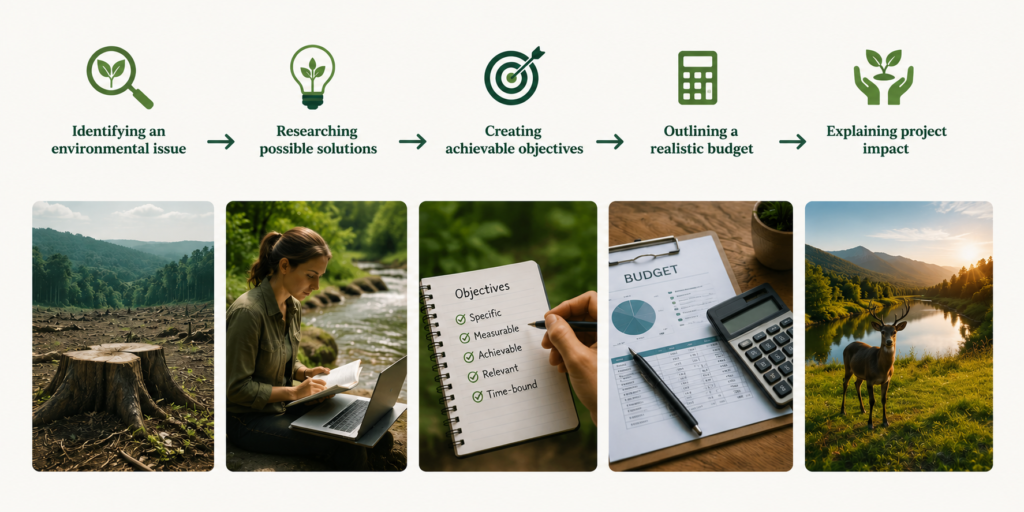
It is best to plan, think of an idea, start researching, and then write out your ideas. Just getting started and taking small steps builds momentum. Here are the brief actions you can take.
- Identifying an environmental issue
- Researching possible solutions
- Creating achievable objectives
- Outlining a realistic budget
- Explaining how the project could positively impact ecosystems, wildlife, or local communities
While the above process may seem challenging at first, it can also provide valuable experience in research, planning, communication, and environmental problem-solving. These skills are important and can be utilized in many ways.
Funding Environmental Initiatives Through Grants
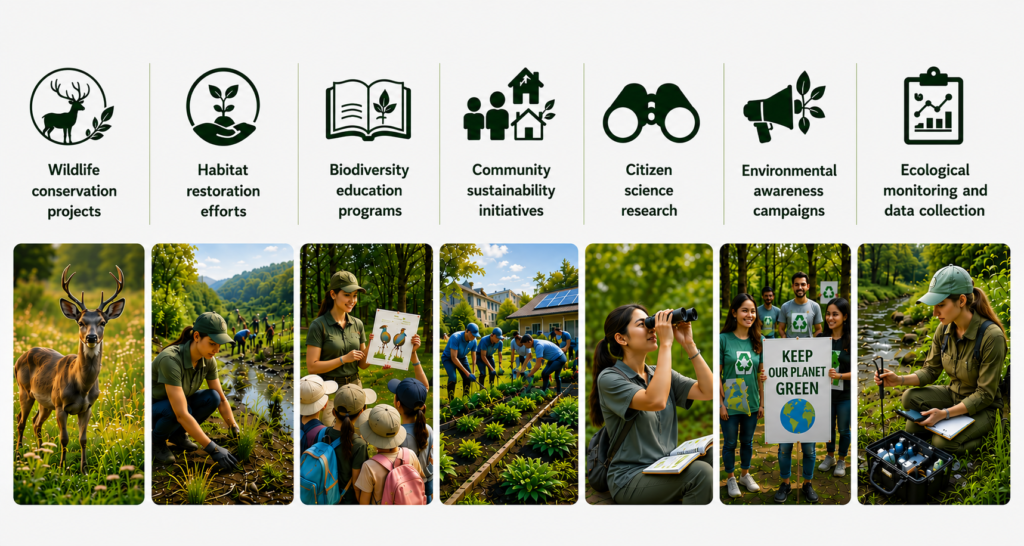
Here are some ideas and areas that could use your input and assistance. Writing grants that fund projects in the following areas is a very powerful way to help on a large scale.
- Wildlife conservation projects
- Habitat restoration efforts
- Biodiversity education programs
- Community sustainability initiatives
- Citizen science research
- Environmental awareness campaigns
- Ecological monitoring and data collection
Even small projects can create meaningful environmental impact when supported by strong planning and community involvement. Learning about grant writing can also help individuals better understand how conservation programs are funded and implemented around the world.
Where to Find Conservation Project Grants and Funding Resources
Grant Writing Academy – Grants for Environmental Conservation
Locating grants is one of the most important steps. Here is a comprehensive resource that aids in this process.
Grants for Environmental Conservation – Grant Writing Academy
WildTeam – Mastering the Art of Grant Writing for Wildlife Conservation
For students and wildlife professionals alike, the following resource provides expertise and in depth guidance on how to accomplish the goal of funding.
Mastering the Art of Grant Writing for Wildlife Conservation – WildTeam
National Resource Conservation Service is an Agency within United States Department of Agriculture
This valuable resource explores science based initiatives that support diverse natural resources like wildlife habitat protection and water quality improvement.
Grantsmanship Guide – USDA Natural Resources Conservation Service (NRCS)
Concluding Thoughts on Stewardship and Action
All things considered, for students, educators, and aspiring conservationists, exploring grant proposal development can serve as both an educational experience and a practical way to support environmental stewardship. Every well-researched idea has the potential to inspire positive change for wildlife, ecosystems, and future generations.
I’m a working mom, and I know how important it is to find purpose in the work we do. I love how you shared that a single grant proposal opened the door to meaningful opportunities for you. It’s also inspiring to see how writing can directly support sustainability and conservation efforts. Indeed, it’s more than just paperwork; it’s a way to protect ecosystems and create lasting impact.
I especially appreciate the reminder that even small, well‑planned projects can make a difference when backed by strong proposals. It makes me think about how many local initiatives could benefit from this kind of support. Do you have any advice for beginners on where to start looking for smaller, community‑level grants that can still create meaningful environmental change?
Alice,
You are correct, finding purpose in the work you do makes a big difference! There are numerous opportunities available. Furthermore, creating grants that will fund conservation projects brings forth change that does give meaning to one’s life.
Additionally, I still remember how developing a grant proposal as a college student was inspiring and created life long memories through gained employment in an Ecology lab. Helping to protect the ecosystems and endangered native plants in the state of New Jersey was very fulfilling and enjoyable.
In answer to your question, I think it is important to focus on an area that you have a strong interest in. More specifically, you said you would like to work on community projects. Thus, for example, if you enjoy working with children, then you can work with schools to bring forth change through educational conservation initiatives or projects. As I am sure you know, awareness is an important part of the solution and a key starting point in taking action for change.
Next, follow the steps to develop a grant proposal for conservation as described in my article. You can also use the resources listed there, along with the following additional resource, to find funding opportunities and support. Simpler Grants is the official U.S. government resource for finding federal grant opportunities for wildlife conservation and environmental projects.
Great Response!
Rhonda